What Nobody Tells You About Making Something Great With Other People
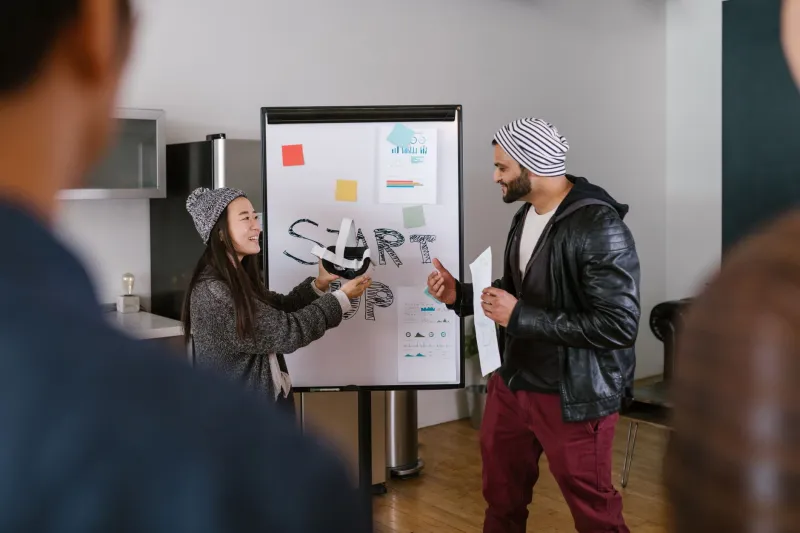
Everybody loves a good origin story about creative partnership. Lennon and McCartney. Jordan Peele and Monkeypaw Productions. The Coen Brothers. We romanticize these pairings like they were destiny — two forces clicking into place and producing something the universe couldn't have delivered any other way.
What we skip over is the part where they probably drove each other absolutely crazy.
Collaboration is one of those words that gets thrown around like it's automatically a good thing. And honestly? It often is. But it carries a cost that most people seriously underestimate before they dive in — and if you go in blind, that cost has a way of quietly wrecking the whole project before it ever sees the light of day.
The Clock Doesn't Lie
Let's start with the most obvious one: time. Working solo is efficient in a way that working with others simply cannot be. When you're alone, the decision-making loop is fast. You have an idea, you test it, you kill it or keep it, you move on. When you add even one other person to that equation, every step in the process now requires communication, alignment, and occasionally, a 45-minute Zoom call that could have been a Slack message.
Multiply that across a full project timeline and you're looking at a significant chunk of hours that never show up in the creative output itself. They live in the back-and-forth, the revision cycles, the "wait, I thought we agreed on this" conversations. Agencies and studios build this into their project scopes. Freelancers and indie creators often don't — and they pay for it in burned weekends and missed deadlines.
The time tax is real. Budget for it or get buried by it.
The Ego Ledger
Here's the one nobody wants to talk about: working with other talented people means your ideas will sometimes lose. Not because they're bad ideas. Because someone else's idea was better, or fit the project direction more cleanly, or simply had more momentum behind it in the room.
For solo creators, this never happens. Your vision is the vision. Every choice is yours. There's a quiet comfort in that — even when you're making mistakes, at least they're your mistakes.
Collaboration disrupts that completely. And if you're not ready for it, the friction will eat you alive. The writer who can't let go of a line of copy. The designer who treats every revision request like a personal attack. The director who keeps steering the project back toward their original vision even after the team has moved on. These aren't hypothetical characters — they're people in nearly every creative workplace in America, and they're usually the smartest people in the room.
Being good at your craft doesn't automatically make you good at sharing it. That's a separate skill, and it takes real work to develop.
Creative Control Is a Currency
When you collaborate, you spend creative control. That's just the deal. And depending on who you're working with and how the project is structured, you might spend more of it than you planned.
This is especially true when you're working with clients, collaborators who have funding, or anyone who holds institutional power over the final product. Their preferences carry weight. Their discomfort with risk shapes the work. Their aesthetic instincts — even the ones you disagree with — end up in the room whether you invite them or not.
The question isn't whether you'll give up some control. It's whether what you get in return is worth it. Sometimes it isn't. A collaboration that requires you to sand off everything that makes your work distinctly yours isn't really a collaboration — it's a compromise that leaves nobody happy.
But when the structure is right? When there's genuine creative trust and a shared north star? The loss of control starts to feel less like a sacrifice and more like an invitation. You stop protecting your ideas and start building on everyone else's. That's when the magic actually happens.
The Friction Is the Feature
Here's the reframe that changes everything: the difficulty of collaboration isn't a bug in the process. It's often the mechanism that produces the best work.
When two people with genuinely different creative instincts are both committed to the same project, the tension between their perspectives creates something neither would have arrived at alone. The writer pushes the concept further left; the art director pulls it back toward clarity. The result lands somewhere in the middle — except "the middle" in this case is actually a more interesting, more considered place than either starting point.
This is why the best creative partnerships tend to involve people who don't think the same way. Not people who fight constantly — that's just exhausting — but people who see the problem differently and respect each other enough to argue it out until the work gets better.
At Kream, we've seen this dynamic play out in everything from brand campaigns to editorial projects. The ideas that make people stop scrolling rarely come from one person in a quiet room. They come from a conversation that got a little heated, a sketch that got pushed further than anyone expected, a creative argument that neither party fully won.
What You Actually Get Back
So after all that — the time, the ego, the control — what does collaboration actually give you?
Scale, for one. There are things you simply cannot build alone. A film. A full brand identity system. A content operation that publishes consistently across multiple channels. The ambition of the project determines whether you need other people, and if the ambition is high enough, you do.
Perspective, for another. Your blind spots are invisible to you by definition. A collaborator sees them. The best ones will tell you about them, kindly but directly, before those blind spots become expensive problems.
And maybe most importantly: accountability. Shared projects have shared stakes. When someone else's name is on the work too, the standard rises. You can't quietly let things slide when another person is watching — and that external pressure, annoying as it sometimes feels, tends to produce better outcomes than the gentle self-negotiation of solo work.
The ROI on Letting Go
The creators who get the most out of collaboration are the ones who treat it like an investment rather than a compromise. They go in knowing it'll cost them something — time, control, the comfort of total creative ownership — and they decide upfront that the potential return justifies the price.
They also know when the math doesn't work. Not every project benefits from more cooks in the kitchen. Not every creative partnership is worth the friction it generates. Part of getting good at collaboration is getting honest about which ones are actually worth your energy.
But when you find the right people, with the right shared vision, and everyone's willing to pay the tax? What comes out the other side is the kind of work that makes people ask, "How did they even make that?"
And the answer is usually: together, messily, and better for it.


