Why Your Creative Soulmate Is Probably the Wrong Partner for the Job
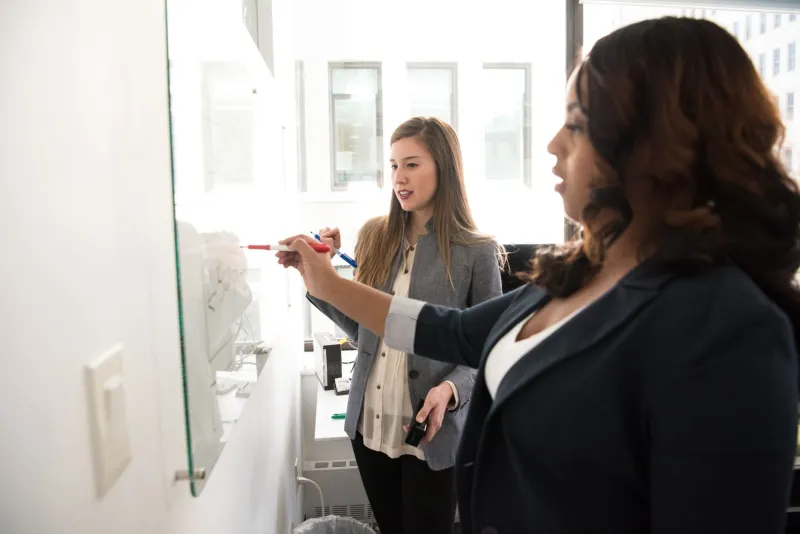
There's a version of collaboration that feels incredible and produces almost nothing remarkable. You know the one. You and a creative partner finish each other's sentences, laugh at the same references, pull from the same mood boards. The energy is electric. The workflow is frictionless. And somehow, at the end of it all, the work looks exactly like everything you've already made — just with two names on it.
This is the collaboration trap. And most creatives fall into it because finding someone who gets you feels like the whole point.
It isn't.
The Comfort Zone Has a Co-Creator Now
Psychologists have a name for what happens when groups of similar thinkers work together: homophily bias. We're wired to seek out people who reflect our own worldview, and that instinct — while great for friendship — is quietly catastrophic for creative output.
When everyone in the room shares the same aesthetic language, the same cultural touchstones, the same definition of "good," you're not actually expanding the idea. You're just getting more confident about a narrower version of it. The echo chamber doesn't amplify creativity — it compresses it.
Research out of Northwestern University found that the most impactful creative work tends to emerge from teams that combine deep domain expertise with outside perspectives — people who understand the field well enough to contribute, but who bring fundamentally different mental frameworks to the table. In other words, the person who makes you go huh, I never thought about it that way is statistically more likely to help you make something genuinely new than the person who immediately says yes, exactly.
What "Creative Friction" Actually Looks Like
Let's be clear: this isn't about conflict for conflict's sake. Difficult personalities and incompatible working styles aren't the same thing as productive cognitive diversity. The goal isn't to find someone who annoys you — it's to find someone who challenges your assumptions in ways that are generative rather than destructive.
Creative friction, at its most useful, sounds like:
- "Why does this have to look this way?" — from someone who comes from a completely different design tradition
- "I don't understand what this is trying to say" — from someone who doesn't share your cultural reference points
- "What if we approached this from the opposite direction?" — from someone trained in a discipline that operates by different rules
Think about the collaborations that have produced genuinely disruptive work. Virgil Abloh's work at Off-White and later Louis Vuitton didn't come from surrounding himself with fashion insiders — it came from importing the logic of streetwear, architecture, and graphic design into spaces that had never seen those influences collide that way. The tension between those worlds was the creative engine.
Or consider how many great film scores have emerged from composers with classical training working alongside directors whose instincts are purely visceral and non-technical. The friction between "here's what the music theory says should happen" and "I just need it to feel like falling" produces things neither person could have arrived at alone.
Finding Your Friction Partner
So how do you actually locate the right kind of creative dissonance? A few practical starting points:
Look outside your medium. If you're a graphic designer, talk to architects. If you're a copywriter, spend time with UX researchers. If you're a filmmaker, collaborate with someone who thinks primarily in data or sound. The goal is to find someone who solves problems using a completely different toolkit — because they'll see possibilities in your work that your own expertise has trained you to overlook.
Seek out different lived experiences deliberately. Cognitive diversity isn't just about professional background — it's about the full context someone brings to a creative problem. Age, geography, cultural upbringing, industry experience — all of it shapes how someone reads an idea. A campaign that feels fresh to a 28-year-old creative director in Brooklyn might land completely differently with someone who grew up in rural Texas or spent a decade working in a totally unrelated industry. That gap isn't a liability. It's data.
Pay attention to who makes you defend your choices. Your best friction partner isn't necessarily someone who disagrees with you loudly — they're someone who asks questions that make you realize you can't fully explain why you made a choice. That moment of inarticulate defense? That's where the real creative work begins.
Making the Friction Productive
Here's the part nobody talks about: finding a friction partner is only half the equation. You also have to build a working relationship that can hold the tension without collapsing into resentment or compromise soup.
A few things that help:
Establish shared goals, not shared aesthetics. You don't need to agree on what looks good. You do need to agree on what the work is supposed to do. When the goal is clear and mutual, disagreements about execution become tools instead of obstacles.
Name the discomfort early. When a collaborator challenges something you feel strongly about, say so — but stay curious. "That pushes back on something I care about, and I want to understand why you see it differently" is a sentence that keeps conversations alive instead of shutting them down.
Protect the weird ideas longer. One of the risks of cognitive diversity is that an idea that lives at the intersection of two different worldviews can look strange or unfinished to both parties before it's had time to develop. Give the hybrid concepts more runway than you think they need. The most interesting work often looks like a mistake before it looks like a breakthrough.
The Kream of the Collaboration Crop
The creative partnerships that produce the richest work aren't the ones built on mutual admiration — they're built on mutual challenge. The people who push your thinking into uncomfortable corners, who refuse to accept your first answer, who bring frameworks you've never encountered before — those are the collaborators worth building with.
Your creative soulmate might be the best person to process a rejection with, or to celebrate a win with. But the partner who thinks nothing like you? That's the one who might help you make the thing you haven't been able to make yet.
Stop looking for the person who gets it. Start looking for the person who makes you explain it — and then makes you question whether you had it right in the first place.